

How to Write When Your Life Is Loud
There's a version of the writing life that looks like this: a quiet house, a cleared schedule, an uninterrupted morning, nobody needing anything from you for at least three hours. You sit down, you write, you emerge at noon feeling accomplished and slightly virtuous.
That version is real for some people some of the time. For most of us, most of the time, it's a fantasy.

When to Stop Revising
There is no objective moment when a piece of writing is done. There is no threshold you cross, no quality you achieve, no standard you meet that objectively determines the piece is finished. Every piece of writing could always be different. Most pieces could, with more work, be better in some ways.

The Wandering Mind
You sit down to meditate. You direct your attention to the breath. For approximately four seconds, the attention is on the breath. And then, without announcement, without permission, without any decision on your part, you are thinking about something you said in a conversation three days ago that you wish you'd said differently, and the attention has been on this conversation for an unknown period of time before you notice that it's there…

Playing Without a Plan
Ask a child what they're making and the answer is often the most honest thing you'll hear about creative work: I don't know yet. The making and the knowing are simultaneous. The thing reveals itself in the process of being made rather than being made from a predetermined vision of what it should be. The play and the work are the same thing, and the question of whether it's serious doesn't arise because the question isn't relevant.
The Permission to Stop
You know you need to rest. You know the system is depleted and the work is suffering and the pushing through isn't producing what pushing through is supposed to produce. You know, intellectually and completely, that stopping is the right thing to do. And you can't make yourself do it.

What Rejection Is Actually Telling You
You've heard the famous rejection stories. The ones about the books that were rejected dozens of times before finding a publisher and going on to sell millions of copies. The ones about the now-canonical authors who collected years of rejections before their first acceptance. These stories get told as encouragement, as evidence that rejection doesn't mean what it feels like it means, and they are true and they are useful and they land about as well as telling someone with a broken arm that other people have recovered from broken arms.

Breath as a Creative Tool
You've been breathing your entire life without thinking about it, which is mostly a feature rather than a bug. The autonomic nervous system handles the breath so you don't have to, keeping you oxygenated through sleep and stress and everything in between without requiring your conscious participation.

A Ritual for the End of the Day
Almost all the ritual advice you'll ever encounter is about mornings. How to start. How to launch. How to seize the day before it seizes you. The morning routine has its own entire genre of books and podcasts and productivity content, and some of it is genuinely useful.

The Shame Storm
You sent it. You clicked publish, or submit, or share, or you handed it across a table to someone whose opinion matters to you. For a moment you felt the relief of it, the clean exhale of something that had been held finally being released.

What to Do When You Hate Everything You Write
There's a particular kind of afternoon where you read back what you wrote in the morning and wonder if you've ever had a single original thought in your life. The sentences look flat. The ideas feel borrowed. The whole thing has the energy of a slightly damp paper bag.
If you've been writing for any length of time, you know this afternoon. You've probably had it more than once. You may be having it right now, which might be exactly why you're reading this.

The Difference Between Revision and Editing
Writers use the words revision and editing interchangeably, which is understandable because the activities share some territory and the distinction between them isn't always obvious from the outside. Both involve returning to a draft and changing it. Both require reading the draft carefully and making judgments about what's working and what isn't. Both are, in the broadest sense, about improving the piece.
Sitting With Discomfort
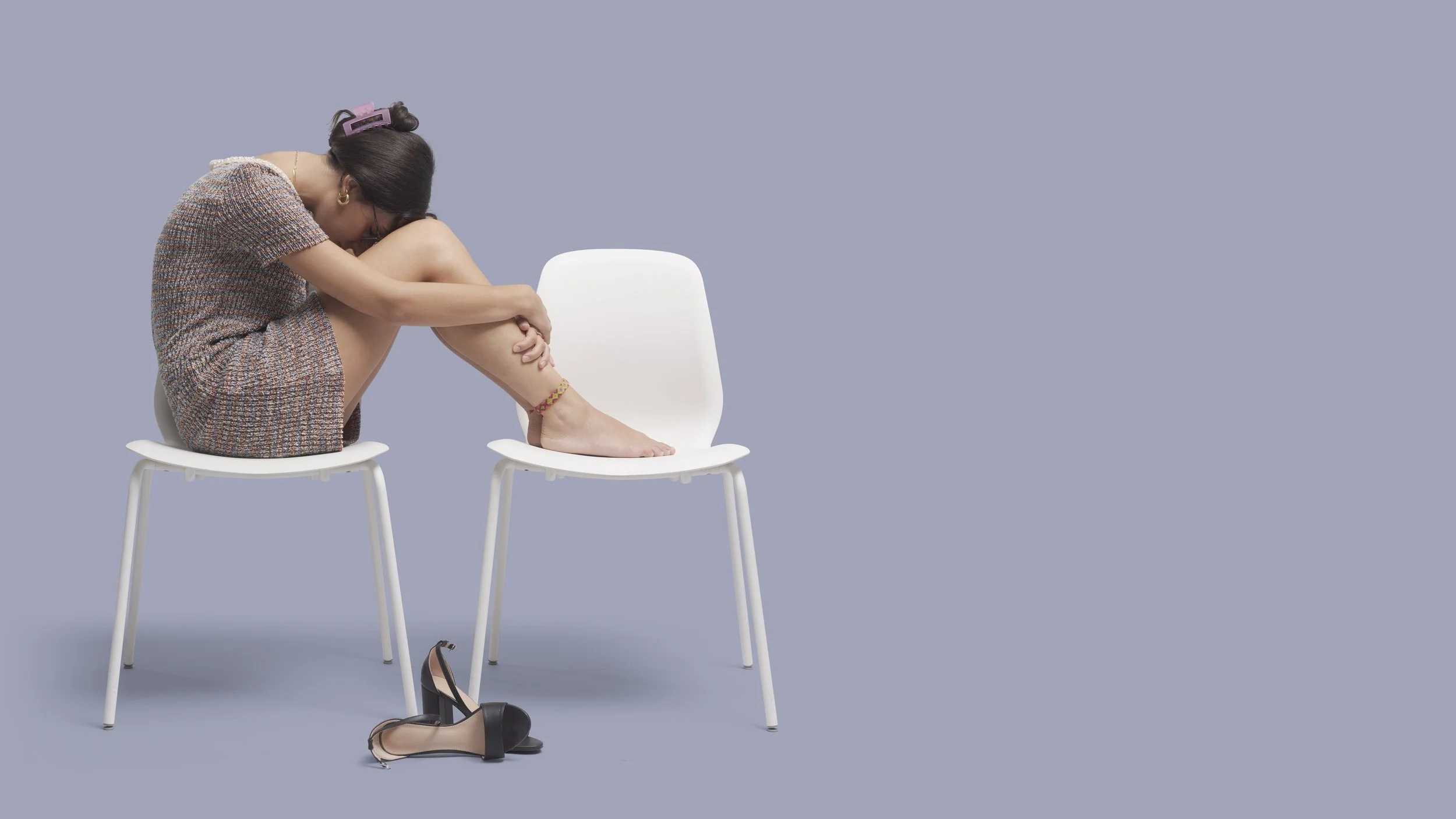
One of the things that contemplative practice teaches, quietly and through accumulated experience rather than through instruction, is that discomfort is survivable. Not comfortable. Not something to seek out. But survivable, and more than that, something that can be present in awareness without requiring immediate action to make it stop.

The Accidental Project
It starts as something else. A note you were taking while working on the main thing. A piece you made to warm up before the real session began. A tangent you followed because you were curious, with no intention of it going anywhere. A mistake that produced something unexpected. A conversation that you wrote down afterward because you didn't want to lose it.

How to Actually Rest
Most people don't know how to rest. This is not an insult. It's an observation about what happens when you ask someone who has been working hard for a long time to stop working and rest, and what they actually do with that instruction.

Submitting Into the Void
There is a specific kind of email that takes longer to write than it should. The subject line alone gets revised four times. The attached file gets renamed, reopened, reread one more time even though you've already read it seventeen times and changing it now would only delay the sending further. The send button sits there looking innocent and you look at it for a moment longer than necessary and then you press it and the email disappears into the internet and you close the laptop and go do something else and try not to think about it.

The Creative Cost of Chronic Tension
At some point today, without noticing it happened, you probably raised your shoulders toward your ears. Or clenched your jaw. Or held your breath for a moment while reading something difficult. Or gripped your pen or your mouse harder than the task required. Or sat in a position that your spine would object to if it had a voice, which in a sense it does, just not one that speaks loudly until the damage is done.

The Transition Ritual
There's a problem that doesn't have a widely agreed-upon name yet, which makes it harder to talk about and harder to solve. It's the experience of being physically in one place while mentally still in another. Your body is home but your mind is still at the office. You're sitting down to write but you're still rehearsing the conversation you had with a difficult client two hours ago. You're with the people you love but you're somewhere else entirely, and everyone can feel it, including you.

Perfectionism Isn't About Quality
Perfectionism has excellent PR. It shows up on job interviews as the humble brag disguised as a flaw. It gets framed as caring deeply, as having high standards, as being unwilling to put anything into the world that isn't worthy. It sounds, if you say it right, almost like a virtue.

Seasonal Rituals for Creative People
Somewhere in the middle of winter, usually around the point where the holidays are over and the novelty of the new year has worn off and there are still months of cold and dark ahead, a lot of creative people hit a wall. The productivity goals set in January feel distant and slightly absurd. The energy isn't there. The work feels harder than it did in October. Something is off, and the most common explanation people reach for is that they're failing somehow, that the wall is a personal failing rather than a seasonal one.

Reading Your Own Work Like a Stranger
The hardest problem in revision is not finding what's wrong with the draft. Most writers, given enough distance from the work, can find plenty wrong with it. The hardest problem is seeing the draft accurately, seeing what's actually on the page rather than what you remember intending to put there, what you intended to communicate rather than what the language is actually doing, what the reader will experience rather than what you experienced writing it.